Security readiness is bigger than technology. A useful view of risk considers the entire environment and how its parts connect.
1SNAPSHOT
Healthcare Readiness Snapshot #1 from Compliance Readiness Advisors
The broader picture
Good security starts with good visibility.
Independent healthcare practices rely on technology every day, but technology is only one part of the security picture. Vendors, documentation, internal processes, and management decisions also shape how risk is understood and addressed.
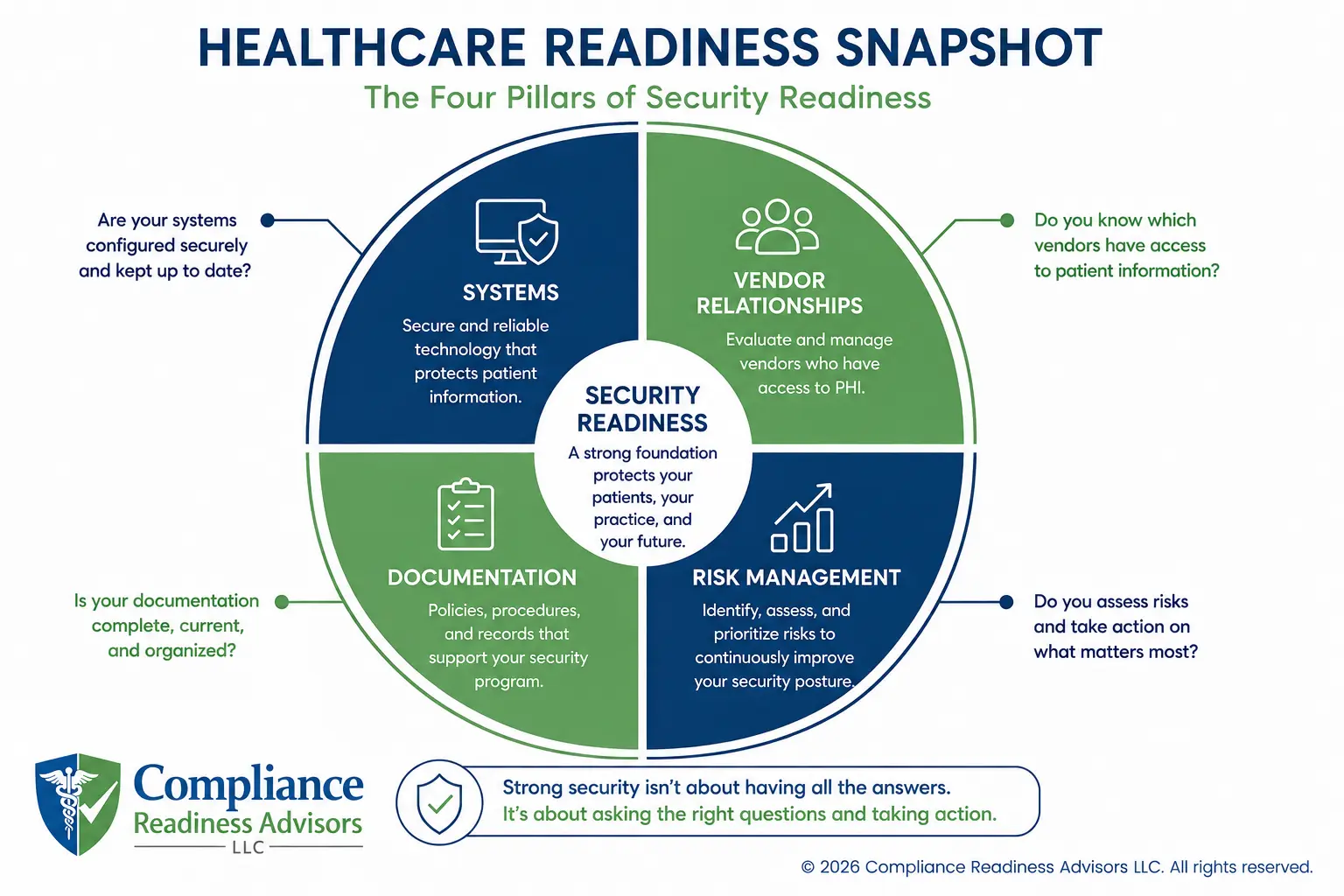
The four pillars provide a practical way to organize that picture. Looking across them together helps leadership see where responsibilities connect, where information may be incomplete, and what deserves attention first.
What to look across
Four areas that work together.
01
Systems
Secure and reliable technology should be configured, maintained, and kept current to support the protection of patient information.
02
Vendor relationships
The practice should understand which outside organizations have access to patient information or critical systems and what that access includes.
03
Documentation
Policies, procedures, agreements, and supporting records help turn expectations into repeatable and demonstrable practices.
04
Risk management
Risks should be identified, assessed, prioritized, assigned, and revisited as the environment changes.
Strong security is not about having all the answers.
It is about asking the right questions and taking action.